Parla in modo efficace e passa l’esame: la guida definitiva al Cambridge First Speaking B2

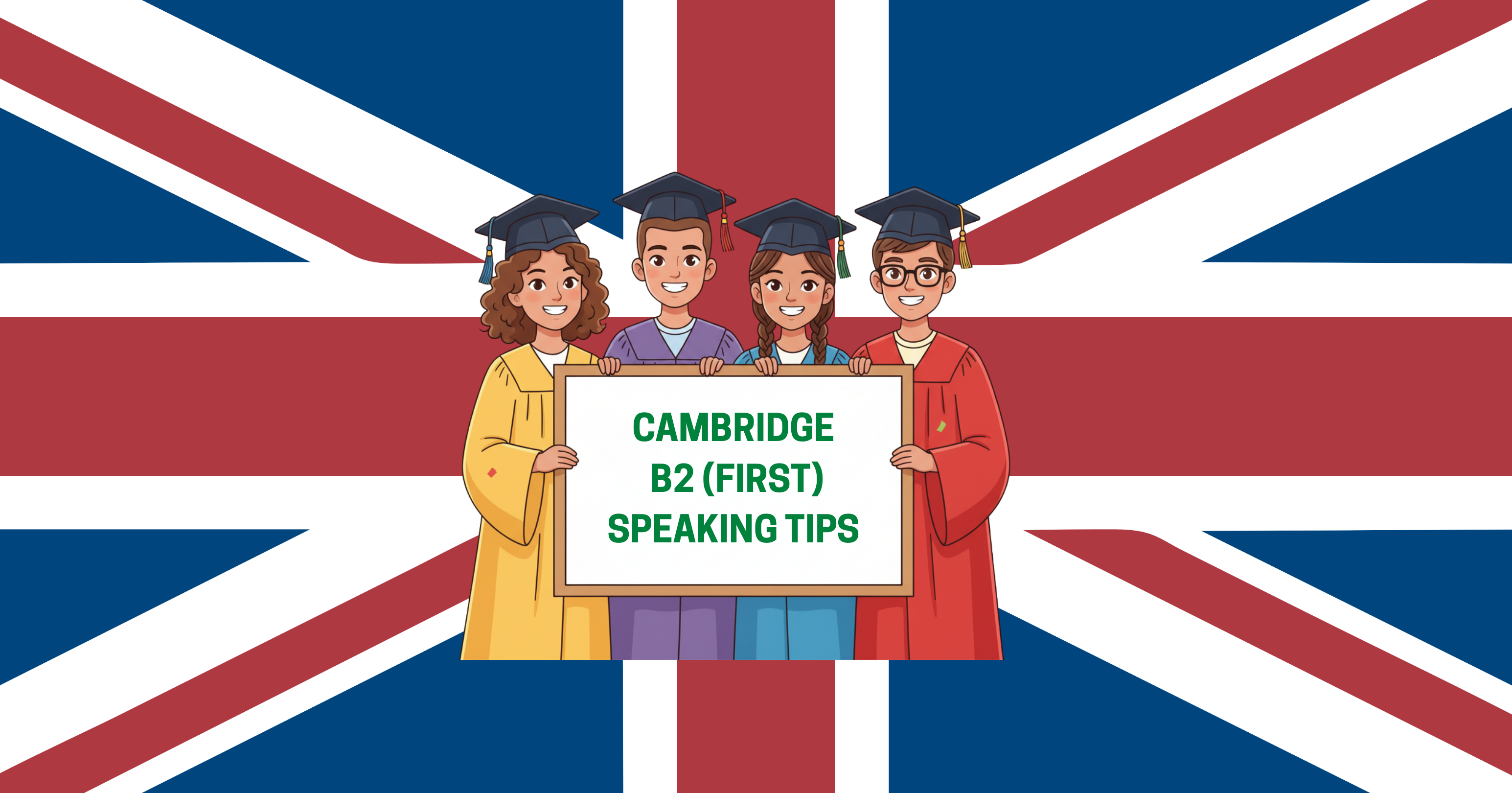
La prova di Speaking del Cambridge First (B2) valuta la capacità dello studente di comunicare in inglese in modo chiaro, sicuro e flessibile, sia in situazioni quotidiane sia in contesti più complessi. Gli argomenti possono spaziare tra vita quotidiana, hobby, studi, viaggi, sport, salute, tecnologia e opinioni personali.
L’esaminatore non cerca risposte difficili, ma frasi coerenti, opinioni motivate e capacità di interagire con il partner. Con le strategie giuste, anche studenti con livello intermedio possono ottenere ottimi risultati e dimostrare sicurezza linguistica.
Speaking Part 1 – Domande personali
In questa fase, l’esaminatore fa domande personali su argomenti di tutti i giorni: famiglia, scuola, hobby e interessi.
Obiettivi principali:
Parlare con frasi complete
Dare motivazioni e piccoli esempi personali
Mostrare pronuncia chiara e sicurezza
Consigli pratici:
✅ Rispondi sempre in frasi complete
✅ Fornisci motivazioni o esempi concreti della tua vita
✅ Mantieni un tono naturale e sicuro
✅ Usa intonazione variata
Grammatica utile:
Tempi verbali: present, past, future
Modali: can, could, should per capacità o possibilità
Comparativi e superlativi per descrivere esperienze
Frasi per preferenze: I prefer…, I would rather…
Esempi migliorati:
Q: “Do you enjoy studying English?”
✅ “I love learning English since it helps me connect with people from other countries. I often watch films in English to practise and improve my skills.”
❌ “Yes, I like it.”
Q: “What do you like doing in your free time?”
✅ “Most of my free time is spent playing football and hanging out with friends, which is a great way to unwind after school and enjoy myself.”
❌ “Football.”
Speaking Part 2 – Foto e confronto
Ogni candidato deve descrivere due foto e confrontarle per circa 1 minuto. Non basta descrivere: è importante confrontare, dare opinioni e motivazioni.
Consigli pratici:
✅ Parla di somiglianze e differenze: both… but… while… whereas…
✅ Dai opinioni motivate: I think…, In my opinion…
✅ Usa aggettivi vari: interesting, exciting, relaxing, challenging
✅ Specula sulle immagini se non conosci tutti i dettagli: might, could, probably
Grammatica utile:
Comparativi e superlativi: bigger, more exciting, the most interesting
Present continuous per descrivere azioni: The people are playing football
Frasi con might / could per ipotesi
Esempi migliorati:
✅ “The first image shows children having fun outdoors with football, whereas the second shows a quieter scene with kids reading at a table. Being active seems more enjoyable, though reading is certainly calming and informative.”
✅ “The family in the first picture appears to be enjoying a picnic in the park, while the second is focused on preparing food in the kitchen. Outdoor activities feel more refreshing, though cooking offers a chance to be creative indoors.”
Speaking Part 3 – Interazione / discussione con il partner
In questa fase, dovrai discutere con il partner, dare opinioni, fare suggerimenti e concordare o dissentire.
Consigli pratici:
✅ Coinvolgi il partner: What do you think? Do you agree? Would you like…?
✅ Concorda o dissentisci in modo educato: Absolutely, That’s a good point, I’m not sure, I see your point, but…
✅ Dai suggerimenti chiari e motivati: I suggest… because…
✅ Non dominare la conversazione
Grammatica utile:
Frasi per opinioni: I think…, I believe…, In my opinion…
Espressioni per accordo/disaccordo: I agree, I don’t think so, On the other hand…
Modali per suggerimenti: should, could, might
Esempi migliorati:
Q: “Your school wants to organize a cultural event. Discuss what to do.”
✅ “A talent show could involve all students and guarantee a lot of fun. Maybe we could also add a small art exhibition for those interested in drawing and painting. What’s your opinion?”
✅ “Holding a debate could be both stimulating and useful for improving communication skills. Perhaps we could consider that along with other interactive activities. Would that work for you?”
Speaking Part 4 – Discussione futura / opinioni personali
Si discutono temi più astratti o collegati alla parte precedente. È importante dare opinioni, confrontare idee, speculare e giustificare le proprie scelte.
Consigli pratici:
✅ Usa connettori e frasi di opinione: In my opinion…, I believe…, On the other hand…, As far as I’m concerned…
✅ Dai motivazioni e esempi concreti
✅ Specula con modali: might, could, should
✅ Parla fluentemente senza pause lunghe
Grammatica utile:
Condizionali: If I had the chance, I would…
Modali per possibilità/opportunità: could, should, might
Connettori per contrasto: however, although, but, yet
Esempi migliorati:
Q: “Do you think teenagers should spend more time outdoors?”
✅ “Being outside has many benefits, from staying fit to meeting friends, while digital activities can still be informative. Balancing both seems like the best approach for young people.”
✅ “Schools could offer more outdoor activities, such as sports tournaments or nature trips, which would encourage students to be active while still keeping some time for technology and indoor learning.”
Errori comuni da evitare
❌ Risposte troppo brevi
❌ Parlare solo con frasi semplici senza motivazioni
❌ Non coinvolgere il partner
❌ Ripetere sempre le stesse parole
❌ Paure di sbagliare e pause troppo lunghe
Suggerimenti finali per eccellere
✅ Pratica con un partner o registrati per ascoltare le tue risposte
✅ Usa una varietà di tempi verbali e connettori
✅ Parla in frasi complete con motivazioni ed esempi
✅ Coinvolgi il partner e mostra capacità di interazione
✅ Mantieni un tono cordiale, sicuro e naturale
Con questa guida, gli studenti italiani sapranno come prepararsi in modo completo e realistico al Cambridge First Speaking, migliorando sicurezza, fluidità e capacità di interazione.
Potrebbero interessarti anche:

09/10/2026
Come superare il C1 Advanced (CAE) Speaking: Guida Completa e Trucchi
La prova di Speaking del Cambridge C1 Advanced (CAE) valuta la capacità dello studente di comunicare...
01/10/2026
Cambridge C1 Advanced (CAE) Listening: guida completa e consigli per l’esame
La prova di Listening del Cambridge C1 Advanced (CAE) valuta la capacità dello studente di comprende...

30/09/2026
10 errori comuni degli italiani in inglese (e come correggerli)
Parlare inglese è più facile di quanto pensi: basta conoscere le piccole trappole in cui cadono quas...